 Program
 Instagram
 Facebook
tanzschreiber Review Day 5 by Veronica Posth
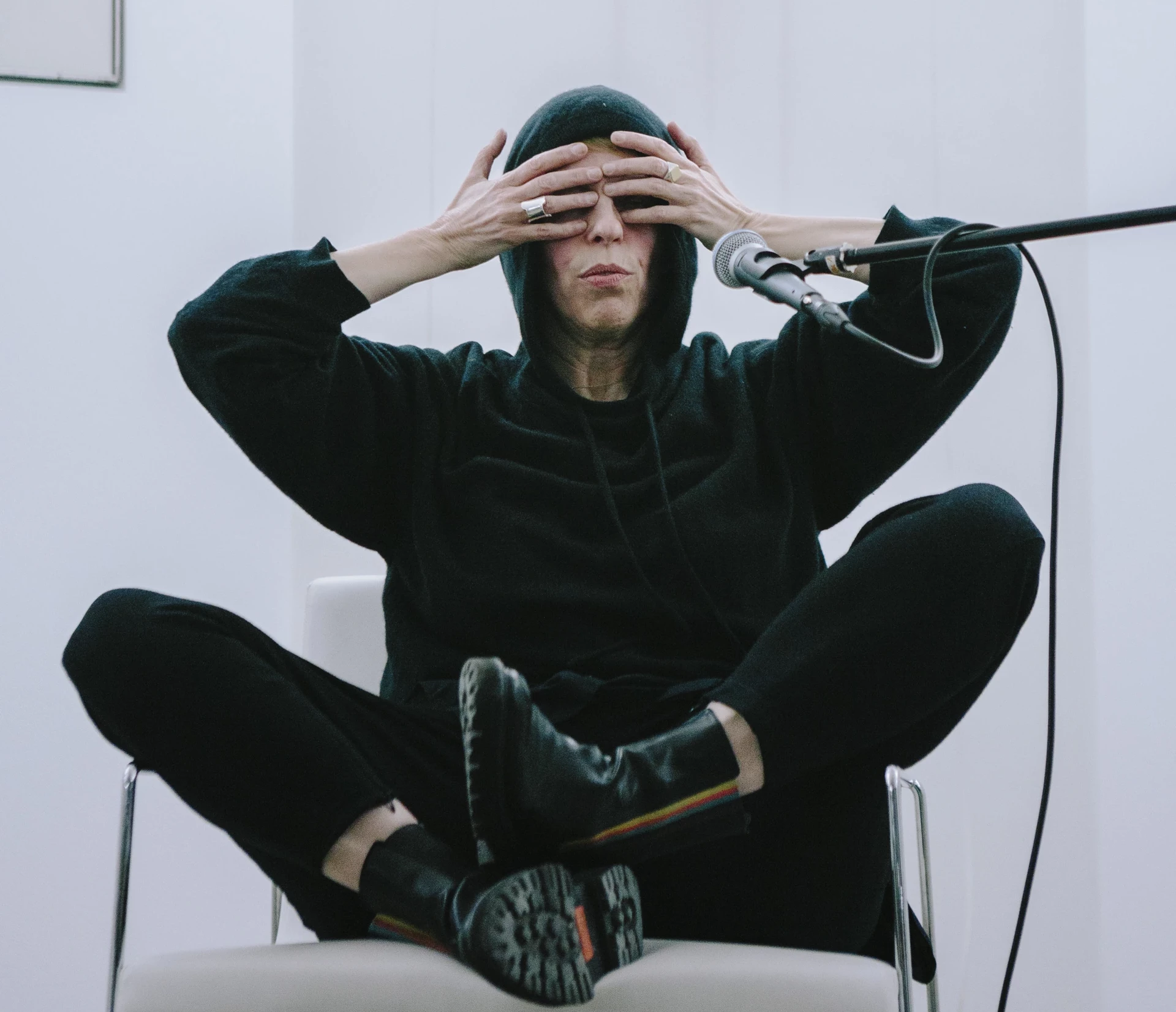
My last day at the Tanzplattform began with "Dance for Nothing (revisited)" by Eszter Salamon, a prominent figure in the Berlin dance scene and beyond. This performance was followed by a talk in which Salamon elucidated the conceptual framework of her work. As I sat watching the piece, I found myself increasingly restless, often drifting away from the text she was reciting-a seemingly journal-like narrative filled with thoughts articulated in a style reminiscent of beat-generation literature. However, her explanation reframed my understanding of the piece. Originally created in 2010, Salamon had blended the words of John Cage with her movements. In this iteration, she explored the modulation and transformation of her gestures, linking them with the sonic elements of Cage's lecture on concepts like nothingness, composition, and emptiness.
Despite the exhaustive and inspiring nature of her post-show discussion, I felt that the work in my mind and soul remained conceptually hefty, emotionally disengaging and physically feeble. Nonetheless, her memorisation of a text more than forty minutes long was noteworthy. What lingered most in my mind at the end of the talk was the connection Salamon made between Cage's notion of 'silence' and the contemporary silence surrounding uncomfortable topics, issues that we often hesitate to address, speak about, and advocate for, even in the realm of dance.
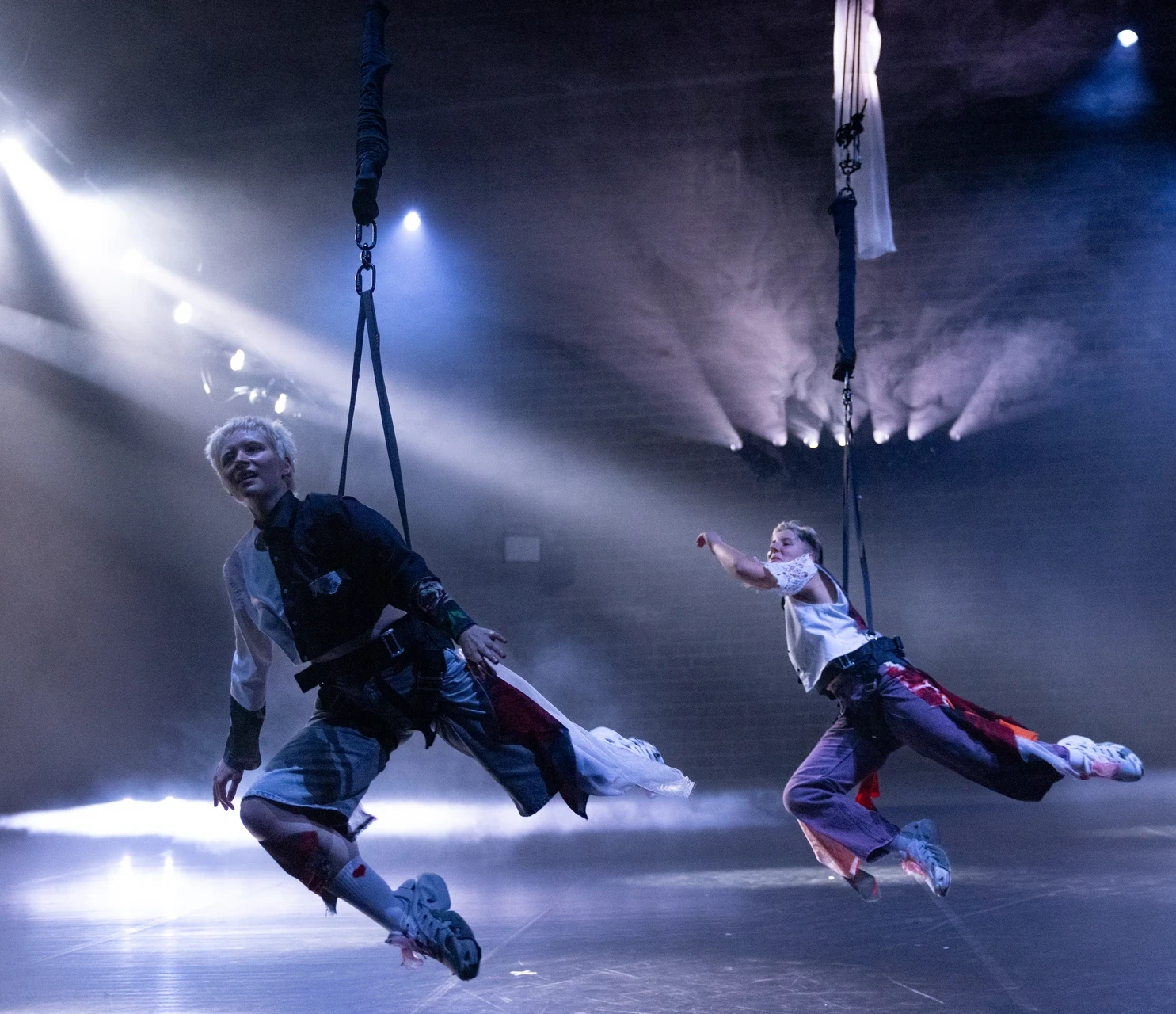
The final performance I experienced at HELLERAU before departing was "Lovedance" by Katharina Senzenberger, performed by Senzenberger and Tasha Hess, who I believe is her romantic partner. This duo presented a love story on stage divided into two distinct parts. The first segment depicted their meeting, falling in love, and developing their relationship. The second illustrated their marriage, a subsequent argument, and a brief disappearance from the stage, culminating in their reunion, re-establishing their love more profoundly than before. The performance featured a fair amount of kitschy imagery and sentimental music, portraying a queer couple-two young women-falling in love.
While it was endearing to witness their authentic affection and the deep connection they shared, I found myself questioning the target audience for this piece. Perhaps it is aimed at teenagers, resonating with their idealistic views on love and the fantasy of flawless relationships with perfect partners. Additionally, knowing that they have significant success within the younger generation, I cannot help but wonder if the contemporary queer movement is often perceived more as a cultural trend among young people than a mature, individualised identity. Of course, I am not referring to the performers themselves. Nonetheless, I appreciated their performance; it exuded genuine warmth and tenderness. The visually striking moments, such as when they soared around each other, suspended by flexible theatre cords, were particularly enchanting.
 © Sebastian Reiser
 © Julia Franken
As I reflect on the culmination of the festival, which I considered a truly exquisite experience, I find myself revisiting all the shows I attended. In this retrospective, I realise that although the selected performances represented some of the 'most remarkable' works in Germany, addressing urgent social, political, moral, and emotional themes, something very bold was notably absent.
I believe the jury worked diligently and thoughtfully to curate the pieces included in this platform. Yet, within the 500 submissions, I wonder if there may have been more daring works that could have been showcased. As an art historian, I'm acutely aware that Art possesses the transformative power to challenge and even alter the status quo. This power is essential for change. To foster improvement in our society, we must actively, courageously, and uncomfortably engage with pressing issues. This is the spirit I hope to see in future works and dance platforms alike. As artists of varying disciplines I believe we should strive to promote and encourage such bold explorations.
In closing, understanding that funding is essential for the ongoing vitality of the arts, I emphasise the critical need for substantial financial support in the arts and culture sectors. Yes, the arts cannot neatly align with political agendas and social trends, yet, if dance and other art forms are to serve as catalysts for change, adequate funding is crucial for sustaining the livelihood and wellbeing of every society. A significant reduction, if not outright suppression of support for the arts in Germany would lead to detrimental, if not catastrophic consequences. We can only harness the transformative power of art through bold and adventurous creativity. This aligns with the true essence of what the arts can achieve: powerful impacts that resonate deeply within society.
About Veronica Posth
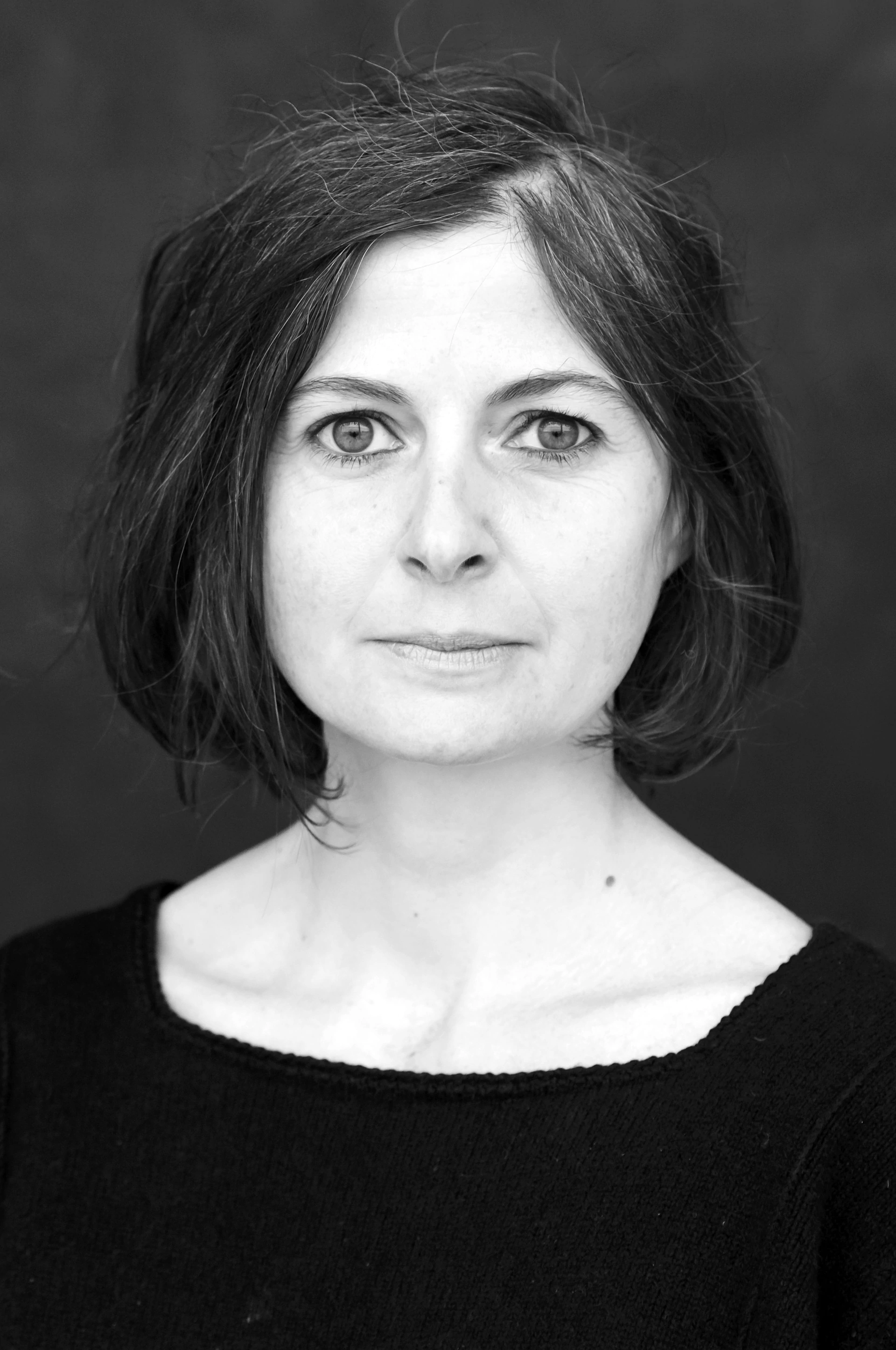
Photo: Lutz Edelhoff
Veronica Posth is a Berlin-based dance and arts journalist with more than ten years of experience in international cultural journalism. Her work has been published in Fjord Review, Dance International, TANZweb, Tanz, Tanec Polska, SeeingDance and Dance ICONS, where she has contributed interviews, features and reviews. With a background in dance and a strong interest in cultural politics and critical theory, she embodies a contextualised and accessible voice in dance criticism.
