
 Program
 Instagram
 Facebook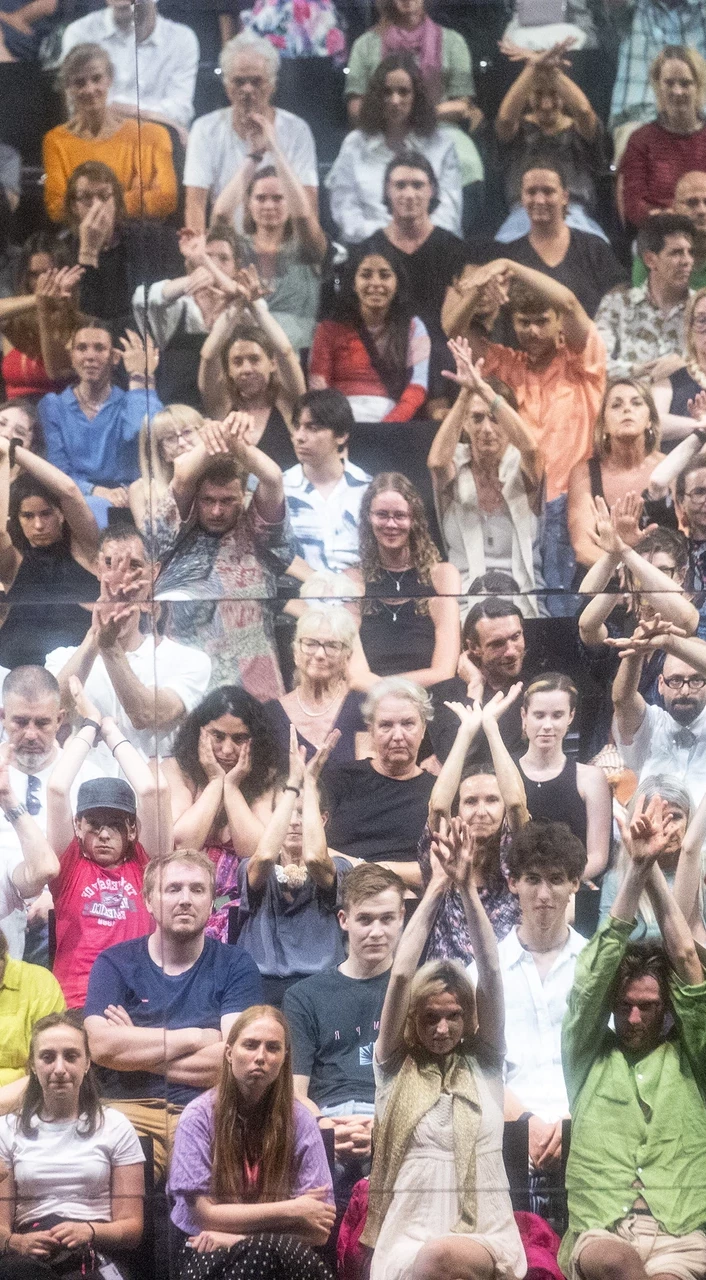
tanzschreiber Review Day 3 by Veronica Posth
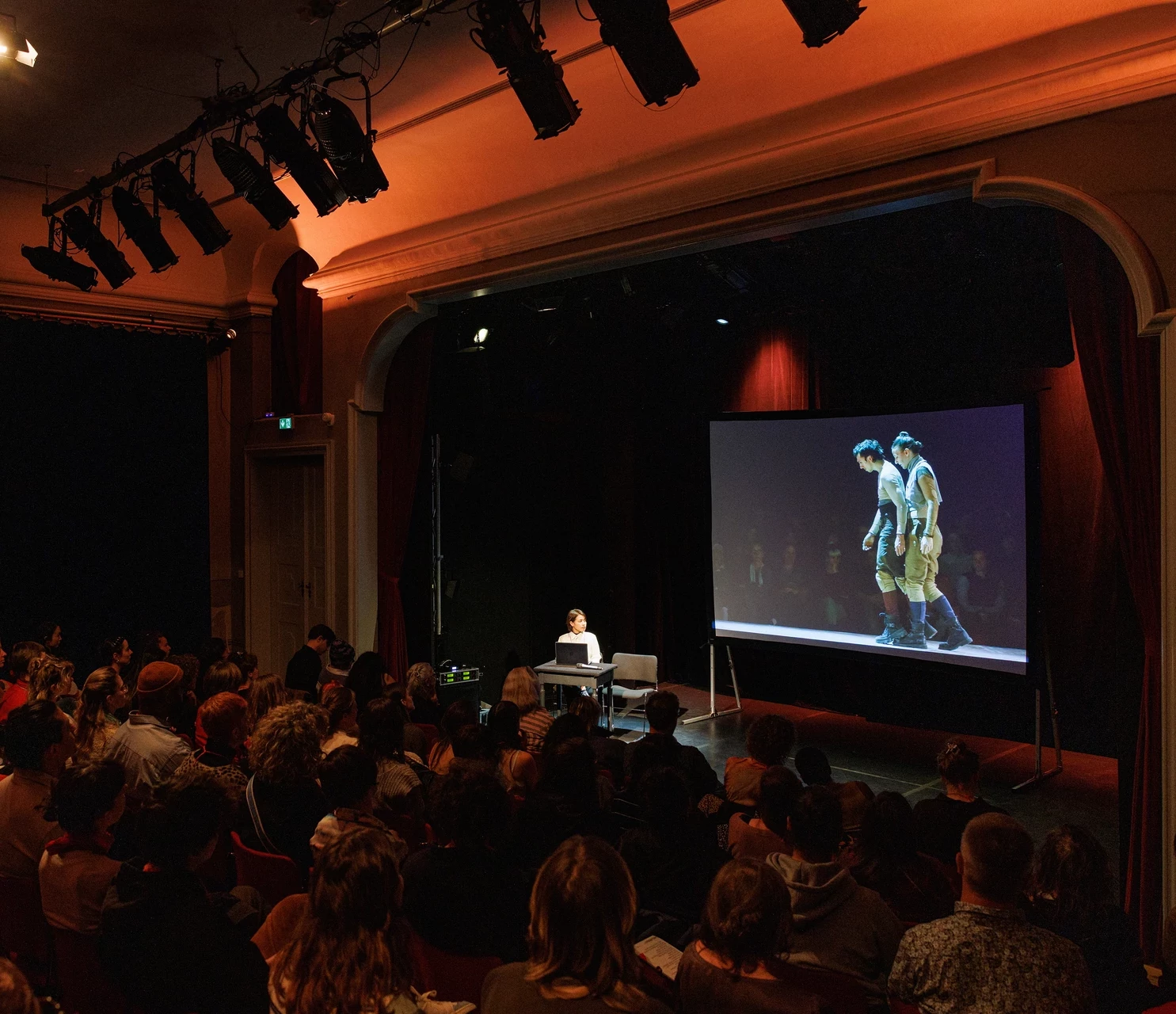
The third day of Tanzplattform Deutschland began with Pitching Sessions at the welcoming and cozy Societaetstheater. There, I witnessed performances by three artists: Adam Russell-Jones, Emi Miyoshi and the Shibui Collective, and Lotte Müller.
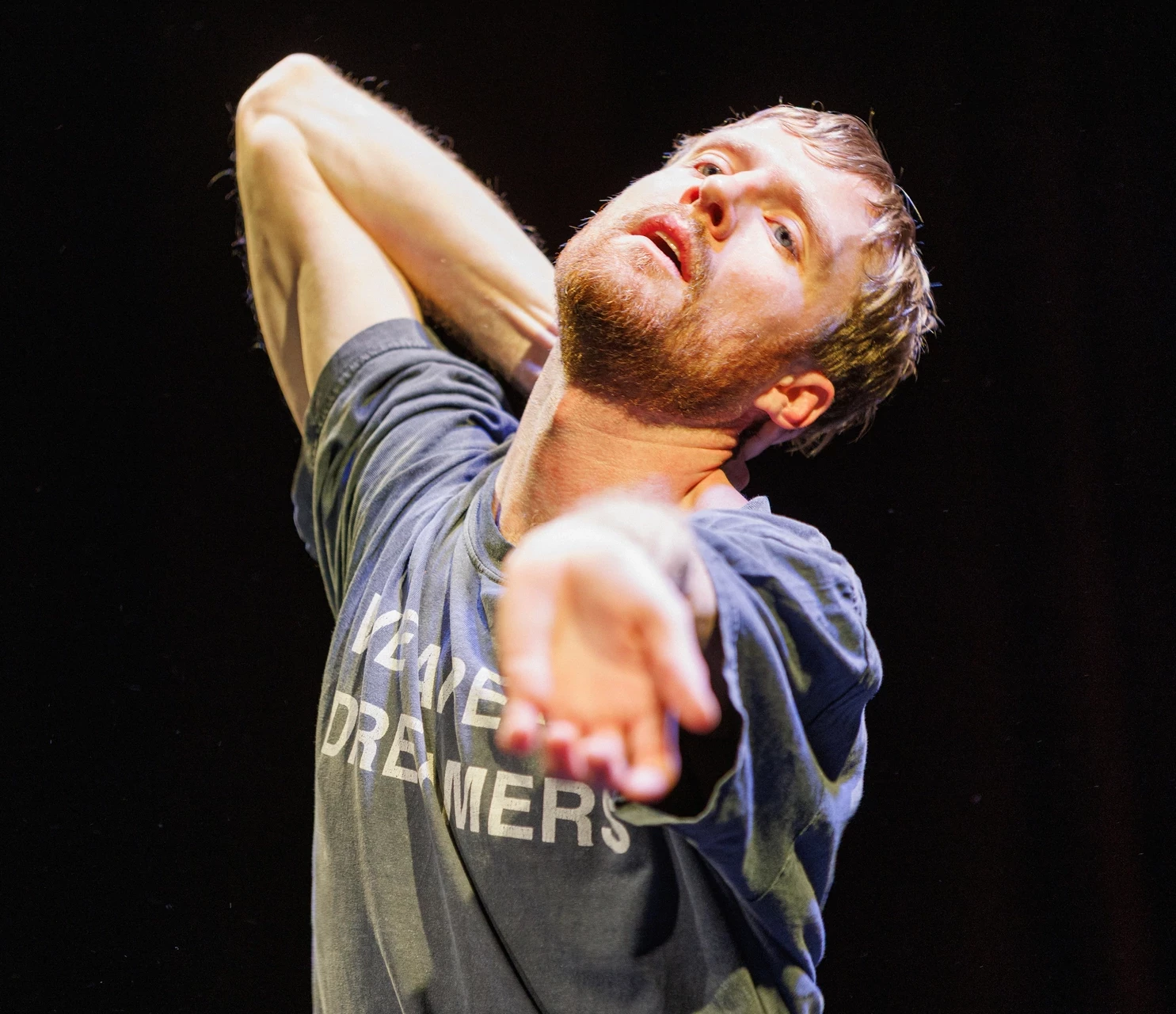
Adam Russell-Jones is a dance artist from Wales, now based in Berlin. The work he presented explores hope and despair, focusing on how crises affect dance. His research is centred around the question: What role do dancers play while the world is besieged by barbarism? He has delved into concepts of despair and hopelessness, feelings commonly experienced by individuals in a world that increasingly feels adrift. In his new work, this sense of despair transforms into resistance, struggle, and resilience.
Emi Miyoshi, with her Shibui Collective, is based in Freiburg. The term "Shibui" is a Japanese word that describes something refined through time and experience. Combining dance, music, visual arts, and social practice, she primarily addressed the beneficial impacts of dance for individuals affected by Parkinson's disease and multigenerational participants. She mentioned how the loneliness and alienation she frequently encounters in people are alleviated through her workshops, classes, and community events.
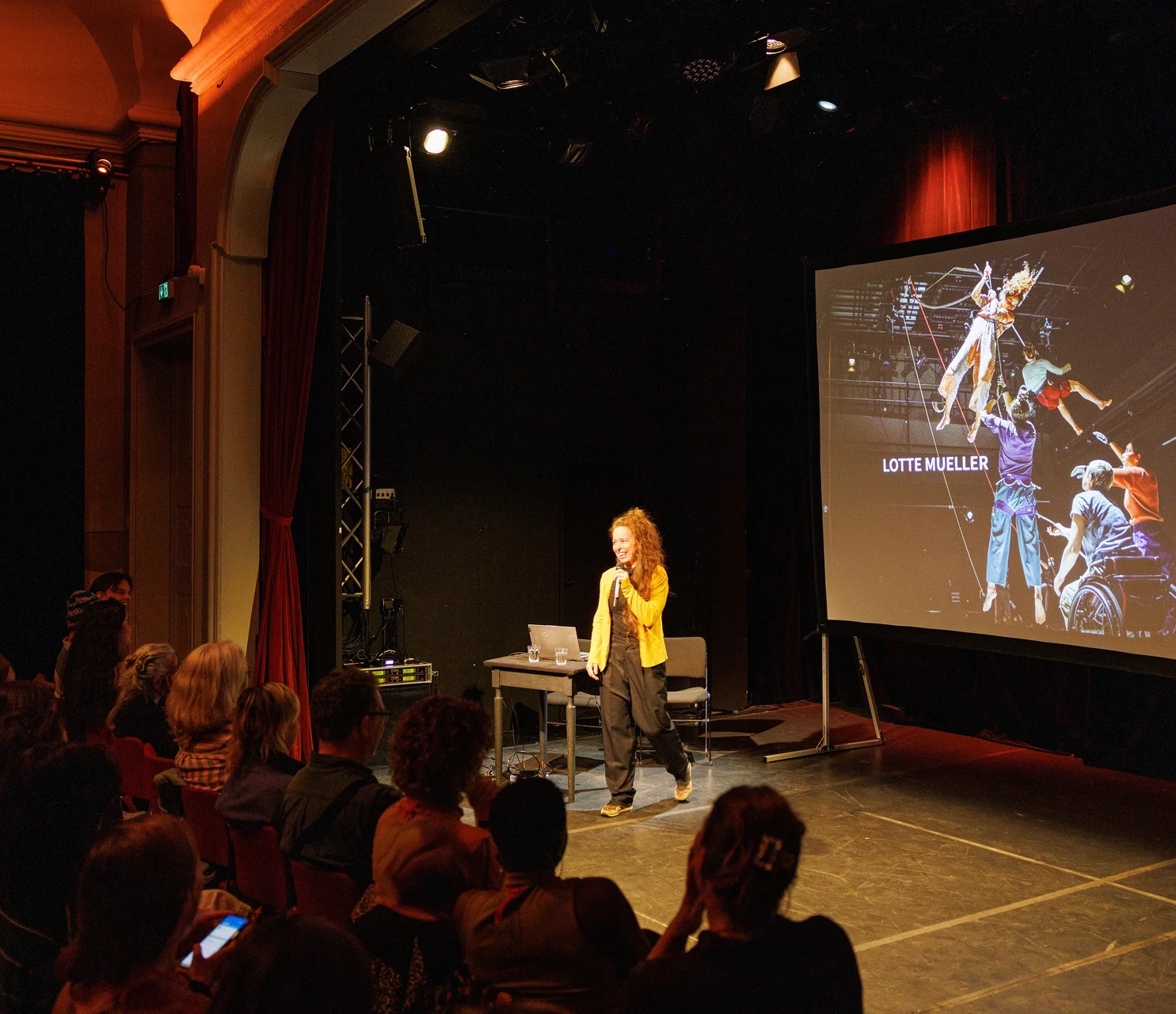
Lotte Mueller, based in Dresden, introduced her work which bridges contemporary dance, circus, and live music. She bases her work on mobility/immobility and flexibility/inflexibility, asserting diversity as a resource. She pointed out the absence of circus schools in Germany, which creates a significant gap in the arts. Müller also discussed her collaborative process with performers and emphasised the participatory elements that foster shared responsibility among everyone involved.
In the afternoon, I visited the Mary Wigman Villa. Although still under construction to accommodate artistic residencies and restore the original Wigman residence, it currently serves as a venue for performances, rehearsal spaces, and discussions about dance. The International Producers' Meet Up also took place here.
In the evening, I attended Spiegelneuronen by Stefan Kaegi (Rimini Protokoll) and Sasha Waltz & Guests. This piece is an ever-evolving experiment that focuses on the human brain and its relationship with the body. The initial research on mirror neurons was conducted by Giacomo Rizzolatti, an Italian neurophysiologist, whose team discovered that mirror neurons-identified first in macaque monkeys and later in humans-are motor cells that activate both when an individual performs a purposeful movement and observes the same movement in others. This discovery provides a physiological basis for understanding actions and empathy, crucial for grasping imitative learning, social organisation, and culture.
Using this knowledge, Kaegi and Waltz developed a work intended to translate theory into practice through a performative experiment, which, in my view, did not succeed. A large mirror covering the entire stage reflected the audience. The performance began with an initial awkwardness; audience members fidgeted, giggling nervously, unsure of how to engage. Among the audience, the performers from Sasha Waltz and Guests and some participants began to move with simple movements, while others followed or diverged. This simplicity and randomness left me perplexed.
As interaction in the space gradually increased, a voice began to explain the theory behind the work. Some texts were in German, others in English, attempting to clarify what was unfolding-or what was intended to unfold-based on the Mirror Neurons theory. At times, researchers' voices suggested that behaviours like following the crowd signify an individual's role in a functioning community. This idea left me puzzled, as it seemed to endorse mass movements as beneficial for individuals and societies at large.
However, in the society we aspire to build-at least within dance and art communities-this notion can be alienating and disquieting. In a world where people often behave like automatons and conformity is pervasive, I questioned the messaging of this performance-experiment. Why was this viewpoint presented? It raises concerns and doubts about the very nature of the performative experiment itself.
 Klaus Gigga
 Klaus Gigga
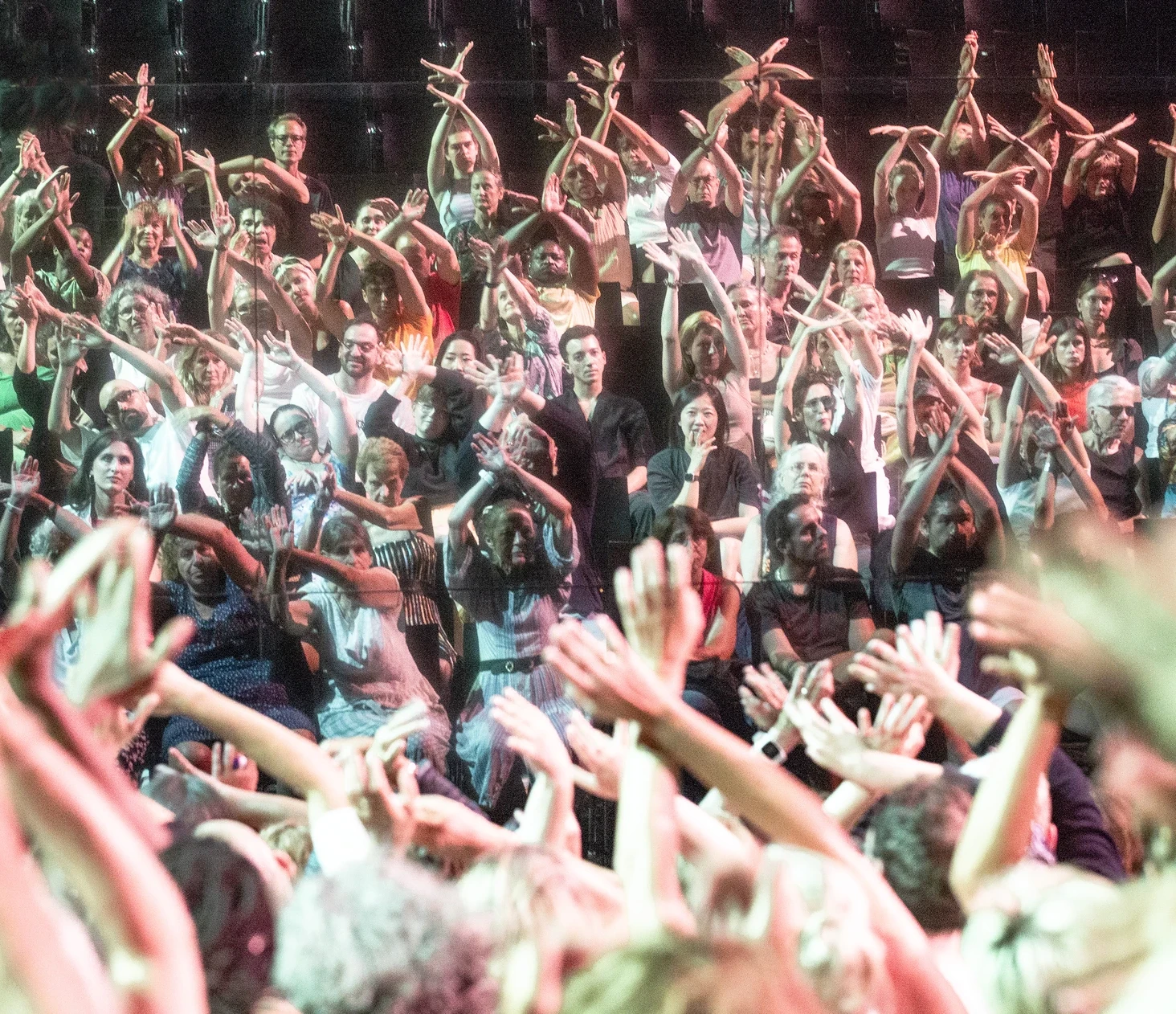 © Bernd Uhlig
About Veronica Posth
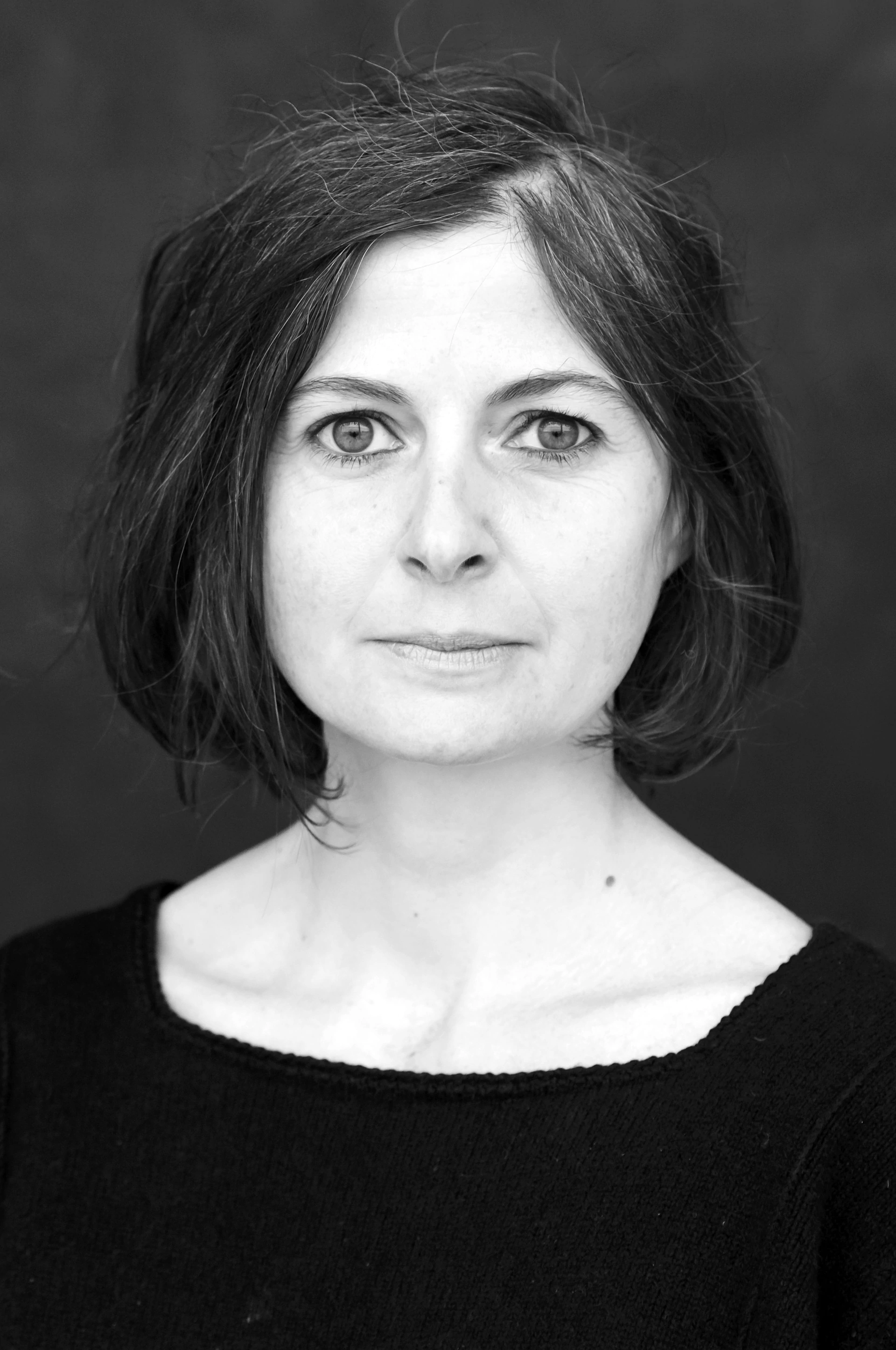
Photo: Lutz Edelhoff
Veronica Posth is a Berlin-based dance and arts journalist with more than ten years of experience in international cultural journalism. Her work has been published in Fjord Review, Dance International, TANZweb, Tanz, Tanec Polska, SeeingDance and Dance ICONS, where she has contributed interviews, features and reviews. With a background in dance and a strong interest in cultural politics and critical theory, she embodies a contextualised and accessible voice in dance criticism.
